

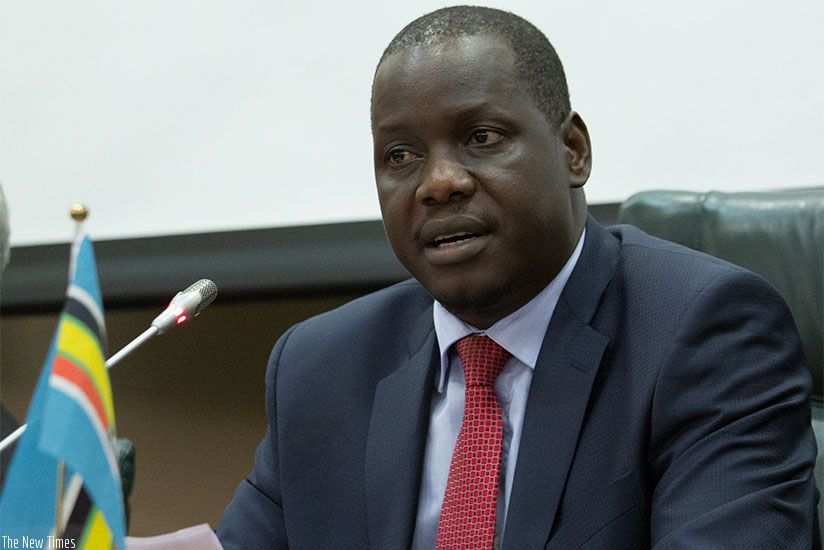
Former Speaker of the East African Legislative Assembly (EALA) Daniel Kidega has welcomed the continued expansion of the East African Community (EAC), describing the admission of new member states as a positive step toward deeper regional cooperation and the broader goal of African unity.
Speaking during an interview with NBS Television on Monday, Kidega said regional integration should be viewed as a long-term process aimed at strengthening unity across the African continent rather than an end goal in itself.
“You should contextually understand what regional integration means or, in this case, the East African integration. It is not an end in itself but rather a process for African unity. Bringing more people on board is not a negative factor — it is actually strength,” he said.
According to Kidega, the broader vision behind regional initiatives such as the EAC is to build strong regional blocs that can eventually unite into a wider continental framework.
“The ultimate intention of regional integration is to ensure that nearby countries form blocs that will eventually unite to form African unity. So the new members are a plus to the integration agenda. I want to salute them and welcome them,” he said.
However, Kidega cautioned that the success of the integration agenda will depend on strict adherence to established rules and a genuine commitment by all partner states to uphold the principles governing the regional bloc.
“What is key is that they must stick to the rules that govern the integration process and commit to the process,” he said.
Kidega also welcomed recent reforms discussed by regional leaders during the latest summit of EAC Heads of State, particularly a proposal aimed at preventing partner states from being expelled from the bloc.
“I think the reform that the summit has mentioned — that one can’t be kicked out — is one of the most interesting. It ensures that partner states contribute resources to the integration agenda based on the strength of their economies,” he said.
He expressed optimism that the reforms, combined with renewed leadership within the bloc, could help accelerate progress toward the EAC’s long-term objectives.
Kidega also welcomed the leadership of President Yoweri Museveni, who recently assumed the chairmanship of the East African Community, succeeding Kenyan President William Ruto during the 25th Ordinary Summit of EAC Heads of State held in Arusha, Tanzania on Saturday.
The transition places Uganda at the helm of the eight-member regional bloc for the 2026–2027 term, with expectations that the new leadership will prioritize deeper economic cooperation, address regional security challenges, and tackle financial constraints affecting the Community.
“The integration agenda is going to move a little more smoothly with the new reforms mentioned by the summit and the new leadership. President Museveni is a solid Pan-African leader, and East African citizens deeply believe in his leadership,” Kidega said.
Leaders attending the summit reiterated their commitment to advancing the EAC’s long-standing vision of economic and political unity in East Africa, a goal many analysts say will require stronger coordination, sustained political will, and effective implementation of agreed regional policies.
Kidega’s remarks come amid growing debate among former legislators and regional affairs analysts about the future of the EAC and the level of political commitment among member states.
Several observers warn that the regional bloc could face significant strain unless governments demonstrate stronger dedication to advancing integration efforts.
The East African Community was originally established in 1967 by Kenya, Uganda, and Tanzania but collapsed a decade later following political disagreements, trade imbalances, and sovereignty concerns that culminated in the collapse of the bloc in 1977.
The Community was revived in 1999 with renewed ambitions to promote regional trade, establish a common market, and eventually pursue political federation among partner states.
More than two decades later, analysts say progress toward these goals remains uneven.
Former EALA legislators, including Lydia Wanyoto and Bernard Kasangavu Mulengani, have previously cautioned that the rapid expansion of the bloc could create challenges if existing integration frameworks are not fully consolidated.
Meanwhile, James Nsaba Buturo, Chairperson of Parliament’s Committee on EAC Affairs, has pointed to limited political will among some partner states as a major obstacle to deeper integration.
According to Buturo, delayed implementation of agreed policies, weak unity among partner states, and shifting political priorities among new leadership in some countries continue to slow the pace of regional cooperation.
The East African Community has also experienced periodic diplomatic and trade tensions between member states, including past border closures between Uganda and Rwanda, trade disputes between Kenya and Tanzania, and security-related disagreements involving Rwanda and the Democratic Republic of Congo.
Experts say that unless partner states strengthen political commitment, ensure timely financial contributions, and prioritize regional cooperation over narrow national interests, the bloc’s long-term ambitions could remain difficult to achieve.
